ICV2026
Featured Speakers

Program
Featured Speakers
Keynote Lecture

Manufacturing the Future, Creating Value
10:30 – 11:00, May 26(Tue.) l Grand Ballroom
Sangmok Lee
President, Korea Institute of Industrial Technology (Korea)
Dr. Sang Mok Lee is the President of the Korea Institute of Industrial Technology (KITECH) and a leading figure in Korea’s manufacturing and materials science community. With a career grounded in metallurgy, he earned his B.S., M.S., and Ph.D. from Yonsei University, where he built a strong academic foundation in metal processing and advanced materials. Before assuming his current role, he served as Vice President of KITECH and contributed to nurturing future talent as a Professor at KITECH–UST. He also led the Korea National Ppuri Industry Center, strengthening national competitiveness in core manufacturing technologies. As Chairman of the Korea Foundry Society, Dr. Lee continues to support innovation across the industrial ecosystem. Since taking office as KITECH President, he has emphasized digital transformation, field-centered R&D, and industry collaboration to ensure that KITECH remains a driving force for Korea’s future manufacturing excellence.
Plenary Lecture 1

Leveraging AI in a Cybersecure Digital Environment to Democratize Advanced Manufacturing
11:00 – 11:30, May 26(Tue.) l Grand Ballroom
Thomas R. Kurfess
CV
Executive Director, Georgia Tech (USA)
AI is prevalent throughout modern society. It is present in our homes, in appliances such as ovens, washers and refrigerators. Data are critical to accurately train AI, and manufacturing operations can have substantial amounts of data. Thus, the time is right to begin integrating AI into manufacturing operations. The opportunity to use AI is evolving in the manufacturing sector, where sensors are used throughout manufacturing operations and on virtually all manufacturing systems and equipment. This talk will discuss the application and integration of AI into cyberphysical manufacturing systems. Some insight will be provided into the direction that AI utilization is heading in the manufacturing workspace, and the types of opportunities that AI will enable in the very near future revolutionizing manufacturing operations from the production floor to the global supply chain.
Plenary Lecture 2

Return of Teleoperation in the Age of Embodied/Physical AI
11:30 – 12:00, May 26(Tue.) l Grand Ballroom
Joohyung Kim
CV
Professor, University of Illinois Urbana-Champaign (USA)
As automation continues to accelerate in manufacturing and logistics, the demand is growing for robots that can collaborate with humans and perform tasks requiring physical interaction, adaptability, and safe operation in real-world environments. In response, companies such as Boston Dynamics, Tesla, and Figure are pushing humanoid robot development forward, bringing renewed attention to this field. This talk explores the background of this trend through technological progress, historical context, and emerging applications, while sharing insights into human-centered robot design, motion control, and interaction.
A particular focus of the talk is the return of teleoperation and its renewed importance in the age of Embodied/Physical AI. Beyond its traditional role as a practical interface for remote control and supervision, teleoperation is becoming an essential tool for skill transfer, shared autonomy, and large-scale embodied data collection. As robots move from structured automation to human-centered environments, collecting rich multimodal data from human demonstrations becomes increasingly important for building more capable and adaptable robotic systems.
Drawing on UIUC KIMLAB (Kinetic Intelligent Machine LAB)’s recent work, including PAPRAS (Plug-And-Play Robotic Arm System) and PAPRLE (Plug-And-Play Robotic Limb Environment), the talk will highlight how modular and human-centered robotic systems can support intuitive teleoperation, direct physical interaction, and scalable data collection. These approaches suggest that teleoperation is not merely a temporary workaround on the path to autonomy, but a foundational component of next-generation intelligent robotics and a practical gateway toward Embodied/Physical AI. Ultimately, this talk will discuss how robots may more naturally integrate into human environments and contribute to the future of intelligent manufacturing.
A particular focus of the talk is the return of teleoperation and its renewed importance in the age of Embodied/Physical AI. Beyond its traditional role as a practical interface for remote control and supervision, teleoperation is becoming an essential tool for skill transfer, shared autonomy, and large-scale embodied data collection. As robots move from structured automation to human-centered environments, collecting rich multimodal data from human demonstrations becomes increasingly important for building more capable and adaptable robotic systems.
Drawing on UIUC KIMLAB (Kinetic Intelligent Machine LAB)’s recent work, including PAPRAS (Plug-And-Play Robotic Arm System) and PAPRLE (Plug-And-Play Robotic Limb Environment), the talk will highlight how modular and human-centered robotic systems can support intuitive teleoperation, direct physical interaction, and scalable data collection. These approaches suggest that teleoperation is not merely a temporary workaround on the path to autonomy, but a foundational component of next-generation intelligent robotics and a practical gateway toward Embodied/Physical AI. Ultimately, this talk will discuss how robots may more naturally integrate into human environments and contribute to the future of intelligent manufacturing.
Plenary Lecture 3

Topic: To be Updated
09:00 – 09:30, May 27(Wed.) l Grand Ballroom
Thomas Bergs
Professor, RWTH Aachen University (Germany)
Prof. Dr.-Ing. Thomas Bergs MBA is a member of the Board of Directors of Fraunhofer IPT and Head of the Manufacturing Technology Institute (MTI) at RWTH Aachen University. He leads the Process Technology Division and is responsible for research in manufacturing and production technology.
He studied mechanical engineering at the University of Duisburg and RWTH Aachen University and received his doctorate from RWTH Aachen University in 2001, for which he was awarded the Borchers Plaque. In 2011, he completed an Executive MBA.
He began his career at Fraunhofer IPT as a research associate and later became head of the Laser Engineering Group and the business unit “Aachen Tool and Die Making.” He has since held leading management positions at the institute.
He was appointed Professor at RWTH Aachen University and Director at Fraunhofer IPT, succeeding Professor Fritz Klocke, and is a member of the board of both production engineering institutes.
He began his career at Fraunhofer IPT as a research associate and later became head of the Laser Engineering Group and the business unit “Aachen Tool and Die Making.” He has since held leading management positions at the institute.
He was appointed Professor at RWTH Aachen University and Director at Fraunhofer IPT, succeeding Professor Fritz Klocke, and is a member of the board of both production engineering institutes.
Plenary Lecture 4

The Human Advantage: Developing the Irreplaceable in an AI-Augmented World
09:30 – 10:00, May 27(Wed.) l Grand Ballroom
Julie Jordan
CV
Senior Advisor for AI and Data Governance, Mississippi State University (USA)
In the age of AI, the greatest risk is not falling behind on technology. It is falling behind on humanity.
Every organization racing toward intelligent, value-driven operations faces the same hidden constraint: AI can generate anything, but it cannot decide what matters. It cannot reconcile the tensions between efficiency and resilience, speed and quality, innovation and responsibility. It cannot stake its reputation on an outcome. Those decisions belong to humans. That agency must be developed, not assumed.
At Mississippi State University, we call this the Human Advantage. It is a three-layer framework for what it means to be irreplaceable in an AI-augmented world.
The Foundation layer is who you are: values, ethical reasoning, emotional intelligence, resilience, and the learning agility to adapt when everything around you changes. These are not soft skills. They are the hard skills of the AI era.
The Operational layer is how you work: communicating intent to AI systems clearly, evaluating outputs with discernment, knowing what to delegate and what to keep, and taking responsibility for every result. These are the necessary skills that make AI useful rather than dangerous.
The Transformative layer is what you accomplish: creating value that did not exist before whether economic, social, knowledge, or process value. Humans must navigate trade-offs that AI can model but never resolve. Humans must own the outcomes and be accountable in a world where robots do the work.
Valufacturing describes a future where productivity and personalized value rise simultaneously, a return to Neo-Craftsmanship, equipped for the intelligence age. That future depends entirely on whether the humans operating within it have been built for it. This talk is about how to build them.
Every organization racing toward intelligent, value-driven operations faces the same hidden constraint: AI can generate anything, but it cannot decide what matters. It cannot reconcile the tensions between efficiency and resilience, speed and quality, innovation and responsibility. It cannot stake its reputation on an outcome. Those decisions belong to humans. That agency must be developed, not assumed.
At Mississippi State University, we call this the Human Advantage. It is a three-layer framework for what it means to be irreplaceable in an AI-augmented world.
The Foundation layer is who you are: values, ethical reasoning, emotional intelligence, resilience, and the learning agility to adapt when everything around you changes. These are not soft skills. They are the hard skills of the AI era.
The Operational layer is how you work: communicating intent to AI systems clearly, evaluating outputs with discernment, knowing what to delegate and what to keep, and taking responsibility for every result. These are the necessary skills that make AI useful rather than dangerous.
The Transformative layer is what you accomplish: creating value that did not exist before whether economic, social, knowledge, or process value. Humans must navigate trade-offs that AI can model but never resolve. Humans must own the outcomes and be accountable in a world where robots do the work.
Valufacturing describes a future where productivity and personalized value rise simultaneously, a return to Neo-Craftsmanship, equipped for the intelligence age. That future depends entirely on whether the humans operating within it have been built for it. This talk is about how to build them.
Plenary Lecture 5

Connecting Carbon and Hydrogen: An Integrated Pathway from Pyrolysis to CO₂-to-Products
10:00 – 10:30, May 27(Wed.) l Grand Ballroom
Christian Doetsch
CV
Head of Institute, Fraunhofer UMSICHT (Germany)
In the age of AI, the greatest risk is not falling behind on technology. It is falling behind on humanity.
This presentation proposes a novel integrated process that links biomass pyrolysis, oxy-fuel combustion and CO₂-co-electrolysis to produce valuable chemicals, as well as heat and oxygen. Coupling these sequential steps creates a high-efficiency carbon capture and utilization (CCU) pathway at the interface of carbon and hydrogen technologies.
First, the biomass feedstock (e.g. lignocellulosic material) is converted via thermal catalytic pyrolysis (TCR) into three streams:
- carbon-rich solids (e.g. biochar for use as a soil conditioner);
- pyrolysis oil (which can be used as a feedstock for gasoline and diesel); and
- a synthesis gas containing CO, H₂, CO₂, minor hydrocarbons, and impurities.
Next, the raw pyrolysis gas undergoes oxy-combustion using pure O₂ (partly supplied by the downstream electrolyzer), producing high-temperature heat and a flue gas predominantly composed of CO₂ and H₂O. Temperature control is achieved through exhaust gas recirculation and water injection. The captured heat - comprising both high-grade process heat and low-temperature latent heat from water condensation - can be utilized flexibly for meeting internal process energy demands, generating additional steam, producing power, or providing district heating.
The condensed water is separated to yield a concentrated CO₂ stream (approximately 95 vol%), establishing a point-source feed for the final stage: CO₂-co-electrolysis. In a single electrochemical reactor, CO₂ is reduced using a co-electrolyte to produce syngas, a platform intermediate for the chemical industry. Meanwhile, O₂ is generated as a by-product to sustain the oxy-combustion unit. This circular integration minimizes the need for an external oxygen supply and enhances overall energy efficiency.
Key advantages of the proposed scheme include:
• Use of inferior biogenic residues
• Production of biochar (soil conditioner), gasoline and diesel (after refining the oil fraction) and various green chemicals (different downstream processes) out of syngas
• High internal energetic efficiency due to recirculating heat (from oxyfuel combustion) and O2 (from CO2-co-electrolysis) minimizing additional energy and oxygen sources
Overall, this integrated pathway offers a promising route to decarbonize chemical production while harnessing both carbon and hydrogen resources.
This presentation proposes a novel integrated process that links biomass pyrolysis, oxy-fuel combustion and CO₂-co-electrolysis to produce valuable chemicals, as well as heat and oxygen. Coupling these sequential steps creates a high-efficiency carbon capture and utilization (CCU) pathway at the interface of carbon and hydrogen technologies.
First, the biomass feedstock (e.g. lignocellulosic material) is converted via thermal catalytic pyrolysis (TCR) into three streams:
- carbon-rich solids (e.g. biochar for use as a soil conditioner);
- pyrolysis oil (which can be used as a feedstock for gasoline and diesel); and
- a synthesis gas containing CO, H₂, CO₂, minor hydrocarbons, and impurities.
Next, the raw pyrolysis gas undergoes oxy-combustion using pure O₂ (partly supplied by the downstream electrolyzer), producing high-temperature heat and a flue gas predominantly composed of CO₂ and H₂O. Temperature control is achieved through exhaust gas recirculation and water injection. The captured heat - comprising both high-grade process heat and low-temperature latent heat from water condensation - can be utilized flexibly for meeting internal process energy demands, generating additional steam, producing power, or providing district heating.
The condensed water is separated to yield a concentrated CO₂ stream (approximately 95 vol%), establishing a point-source feed for the final stage: CO₂-co-electrolysis. In a single electrochemical reactor, CO₂ is reduced using a co-electrolyte to produce syngas, a platform intermediate for the chemical industry. Meanwhile, O₂ is generated as a by-product to sustain the oxy-combustion unit. This circular integration minimizes the need for an external oxygen supply and enhances overall energy efficiency.
Key advantages of the proposed scheme include:
• Use of inferior biogenic residues
• Production of biochar (soil conditioner), gasoline and diesel (after refining the oil fraction) and various green chemicals (different downstream processes) out of syngas
• High internal energetic efficiency due to recirculating heat (from oxyfuel combustion) and O2 (from CO2-co-electrolysis) minimizing additional energy and oxygen sources
Overall, this integrated pathway offers a promising route to decarbonize chemical production while harnessing both carbon and hydrogen resources.
Plenary Lecture 6
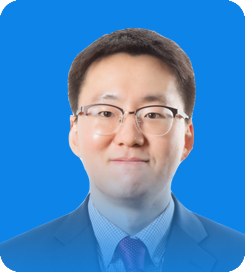
From manufacturing to valuefacturing: How AI adds and transforms value across the spectrum
Chiehyeon Lim
CV
CDO at POSCO N.EX.T Hub, POSCO Holdings (Korea)
In this talk, we define a spectrum of AI-driven value creation from traditional manufacturing to valuefacturing — from assisting decisions, to controlling processes, to integrating end-to-end operations, and to redefining the value a manufacturer delivers. Real-world cases are mapped onto each stage of this spectrum, illustrating the journey from past achievements to future directions. Drawing lessons from the fusion of science-based and data-driven models, the irreplaceable role of domain experts, and the limits of data alone in complex industrial systems, we argue that the critical missing link in industrial AI today is not the technology itself, but the upstream modeling and governance with clear value objectives. This is where innovation in the next era of manufacturing should be shaped.
ICV 2026 Secretariat
Official PCO: ForceMonster co.,ltd
 info@icv2026.org
 +82-70-8880-0258
 #A-2095, Seil building, 2gil-19, Hakdong-ro, Gangnam-gu, Seoul, Korea
info@icv2026.org
+82-70-8880-0258
#A-2095, Seil building, 2gil-19, Hakdong-ro, Gangnam-gu, Seoul, Korea
Hosted by